


Rebranding Without Losing Yourself: Lessons from Real-Time Brand Controversies & How ToTOL Marketing Keeps You Grounded
- Tiffany Liss

- Aug 29, 2025
- 5 min read

Rebranding can be one of the most powerful tools a company has to stay relevant, resonate with audiences, and signal a renewed vision. But it’s also high-stakes: when done thoughtfully, it breathes new life into a brand. When done carelessly, it can spark confusion, backlash, and financial losses that are hard to recover.
At ToTOL Marketing, we believe the key to a strong rebrand isn’t erasing the past; it’s building on it. Recent real-world examples make this clearer than ever.
When Rebrands Backfire: Lessons in What Not to Do
Cracker Barrel’s Logo Rollback (August 2025)

In an attempt to modernize its iconic branding, Cracker Barrel removed its recognizable “Old Timer[1]” figure and barrel in favor of a minimalist design. The backlash was immediate: loyal customers, commentators, and even President Trump criticized the move.[2] Within a week, the chain reverted to its classic logo. The controversy wiped out around $94 million in market value before the stock rebounded.
Lesson: Stripping away heritage too quickly can alienate your most loyal audience.

Bud Light’s Cultural Misstep (2023 Onward)
Bud Light’s tie-in with transgender influencer Dylan Mulvaney[3] created confusion and backlash among conservative audiences. Sales dropped 26–29%, U.S. revenue dipped over 10%, and Anheuser-Busch InBev lost as much as $26 billion in market value. Attempts to re-engage consumers without a coherent strategy[4] only intensified the problem.
Lesson: Rebrands or campaigns misaligned with your core audience risk massive financial and reputational costs.
Gap’s Logo Redesign (2010)

Gap tried to modernize its classic blue box logo with a minimalist design.[5] The result? Outrage. Loyal customers felt betrayed, sales dipped, and the backlash was so strong that
Gap reverted to the old logo within six days.
Lesson: Without extensive customer research, don’t throw away decades of brand equity just for the sake of “new.”

Tropicana’s Packaging Overhaul (2009)
PepsiCo gave Tropicana’s orange juice cartons a sleek new look, ditching the iconic orange-with-straw imagery. Consumers didn’t recognize it on the shelves, resulting in a 20% sales drop over two months, a loss of over $30 million. PepsiCo quickly returned to the original packaging.
Lesson: Bring your customers along on your rebranding journey[6] to prepare them for the change and engage them in making it a success.
Quick Snapshot: The Cost of Misguided Rebrands
Brand | What Went Wrong | Cost of Mistake |
Cracker Barrel | Stripped away heritage iconography | ~$94M market drop; credibility shaken |
Bud Light | Misaligned cultural message; alienated core | ~28% profit drop; ~$26B lost market valuation |
Gap | Abrupt logo change; ignored brand equity | ~$100M spent; reverted in 6 days |
Tropicana | The packaging change erased recognition | $30M lost in 60 days |
These cases demonstrate the risks of rebranding without understanding what your audience values.
When Rebrands Work: Lessons in Smart Evolution
Not all rebrands fail. When done with insight, purpose, and respect for brand heritage, evolution can elevate a brand.
Apple’s Transformation (Late 1990s – 2000s)
Apple didn’t abandon its legacy; it simplified it. The rainbow-striped apple gave way to a clean, modern silhouette, signaling innovation while staying recognizable. Paired with new product design and marketing, the rebrand became a symbol of creativity and sophistication.[7]

Old Spice’s Reinvention (2010)
Once seen as outdated, Old Spice revitalized itself by keeping its core product but repositioning it with humorous, bold advertising (“The Man Your Man Could Smell Like”[8]). Sales skyrocketed, and the brand is now a staple in men’s grooming.

Dunkin’ (2018)
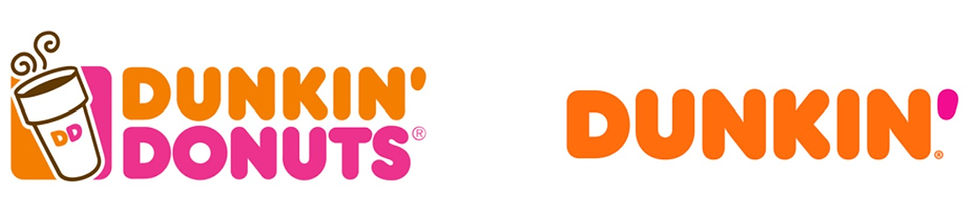
Dunkin’ Donuts dropped “Donuts” from its name, focusing on beverages while still keeping the brand’s familiar colors, font, and personality. It felt fresh but familiar, a careful evolution[9] rather than a hard reset.
The Difference Between Success and Failure
Brand | Approach | Result |
Apple | Simplified but preserved identity | Grew valuation from near-bankruptcy to $3T |
Old Spice | Humorous, bold repositioning | +125% body wash sales in 6 months |
Dunkin’ | Evolved messaging while keeping heritage | ~$1B annual revenue growth |
Cracker Barrel, Bud Light, Gap, Tropicana | Abrupt changes, misaligned messaging | Losses from $30M → $26B; damaged credibility |
What These Stories Teach Us
Don’t abandon your equity. The strongest brands know what customers recognize and value.
Change with purpose. A rebrand should solve a problem or reflect a genuine evolution, not just be a change for the sake of change.
Balance legacy with innovation. The sweet spot lies in honoring your roots while signaling a future-forward vision.
Engage your target audience in the rebranding process by conducting extensive consumer research and recruiting key opinion leaders before launching a new brand.
How ToTOL Marketing Guides Rebrands That Last
At ToTOL Marketing, we help organizations navigate the fine line between innovation and tradition by:
Brand Audits: Identifying what’s sacred in your brand DNA and must remain.
Audience Insights: Understanding how customers perceive you and what they expect.
Creative Strategy: Developing bold yet authentic messaging and visuals.
Rollout Support: Launching your rebrand in a way that excites, rather than alienates, your audience.
With this approach, your rebrand strengthens how your brand feels and connects, not just how it looks.
Final Word
Rebranding isn’t about erasing your story; it’s about reinvigorating it and evolving to something new and better. Cracker Barrel, Bud Light, Gap, and Tropicana illustrate what happens when brands ignore audience attachment and heritage. Apple, Old Spice, and Dunkin’ show that evolution can be powerful when guided by insight and strategy.
With ToTOL Marketing by your side, you can evolve confidently, maintaining identity while positioning your brand for tomorrow.
Are you ready to evolve without erasing what makes you, you? Let’s create a brand journey that’s rooted, resonant, and future-forward.
Sources:
Uncle Herschel Shaped Cracker Barrel’s Image and Values: crackerbarrel.com/about/Uncle-Herschel
Trump says Cracker Barrel should return to the old logo: Joey Garrison, USA Today (Aug. 26, 2025)
Dylan Mulvaney: Trans Actress, Comedian, Content Creator
Bud Light makes desperate move to win back customers after boycott: Patricia Battle, The Street (Feb. 4, 2025)
Minimalist Design – Everything You Need to Know: minimalistdesign.co/articles/minimalist-design-everything-you-need-to-know
Navigating Rebranding: What Customers Deserve To Know and Why It Matters: Jim Heininger, Forbes Council Member for Forbes Agency Council (June 21, 2024)
Apple Logo – The Evolution of a Tech Icon: logoreviews.org/apple-logo-the-evolution-of-a-tech-icon
The Brand Hopper: The Man Your Man Could Smell Like: A Case Study On Old Spice Branding Campaign (Feb. 23, 2023)
The Strategy Behind Dunkin’ Donuts’ Evolution from Donuts to Coffee Shop: Uncommon Food (Feb. 18, 2025)


Comments